Most people don't know their skin age. They might notice a new fine line or wonder why certain products stopped working, but connecting those signs to an actual skin condition — let alone knowing what to do about it — is harder than it sounds.
That gap between "I think my skin is aging" and "here's what's actually happening and what will help" is exactly where AI skin analysis has started to make a real difference. Not by replacing skincare professionals, but by giving both consumers and the brands that serve them a more reliable starting point than a guess or a quiz.
This article looks at how AI tools help identify skin age, why that matters for consumers, and what it means for the skincare businesses trying to serve them well.
What Is Skin Age — and Why Does It Matter?
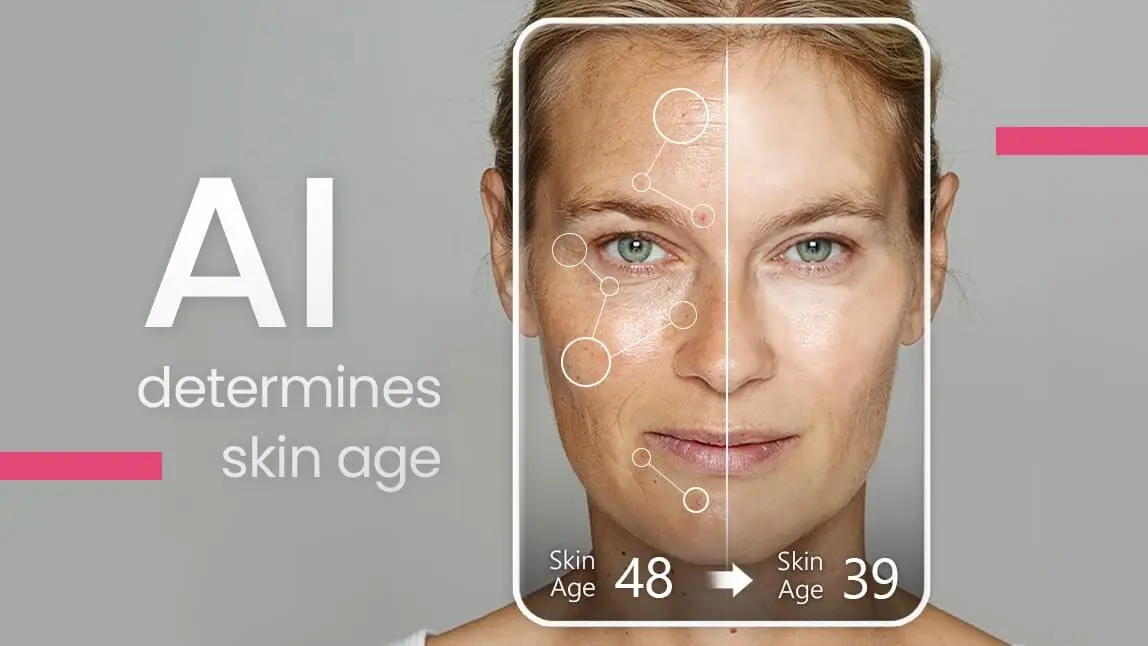
Skin age is not the same as your date of birth. It's a measurement of how your skin is actually performing relative to your chronological age, based on visible signs like wrinkle depth, skin firmness, dark spot distribution, radiance loss, and elasticity. Someone who's 35 might have skin presenting like 28, or like 43 — depending on genetics, sun exposure history, lifestyle habits, and skincare consistency.
The reason this distinction matters is practical: a 35-year-old with a skin age of 43 needs a different routine than one with a skin age of 28, even if both would grab the same "anti-aging" product off a shelf. Without knowing the actual skin age, product recommendations are essentially educated guesses.
For consumers, knowing your skin age does two things. It gives you a concrete, data-backed picture of where your skin actually is — not where you hope it is — and it helps you prioritize. If your skin age is running five years ahead of your chronological age, you know something in your routine (or habits) needs to change. That kind of specificity tends to change behavior in a way that vague "your skin looks a bit dehydrated" feedback never quite does.
The Problem With How We've Been Assessing Skin
Skin analysis has traditionally lived in two places: professional clinical settings and self-service quizzes. Both have real limitations worth understanding.
Dermatologists and aestheticians provide accurate, nuanced assessments — but the format is expensive, not scalable, and requires the client to already be in front of a professional. Most people's skincare decisions happen at a store counter or on an e-commerce page, nowhere near a clinical consultation.
Skincare quizzes moved assessment into the consumer's hands, which helped accessibility. But the reliability problem is significant. A quiz depends entirely on the customer's ability to accurately describe their own skin — and most people can't. Distinguishing between a genuinely oily T-zone and mild combination skin, or noticing fine lines that are subtle enough to miss in a bathroom mirror, requires a trained eye. The quiz can only work with what the person knows to report, and that's almost always incomplete.
"The skincare quiz had a good run, but it was always asking customers to be their own diagnosticians — and most people simply aren't equipped to do that accurately."
Hardware imaging devices — UV cameras and specialized skin scanners deployed in high-end retail and clinical settings — addressed the accuracy problem but introduced new ones: high cost, fixed location, and the need for trained staff to interpret outputs. You're not putting a VISIA machine in every store location.
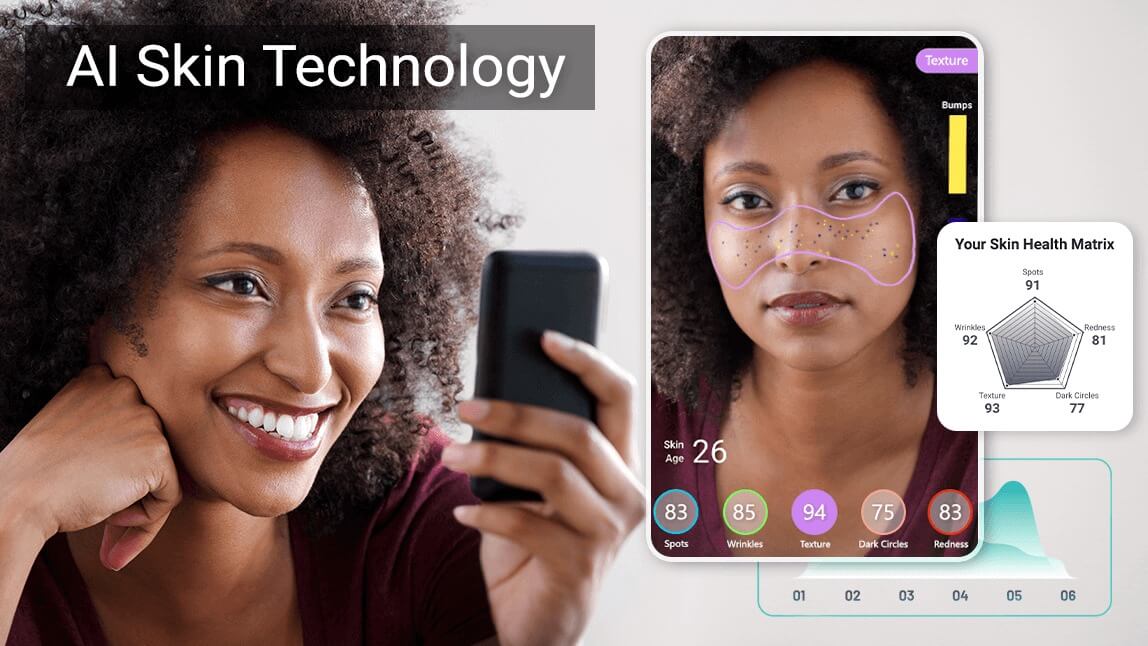
AI skin analysis works differently. It uses computer vision to evaluate a face photo or live video directly, identifying visible skin markers without relying on self-report, without expensive hardware, and in a format that works across retail, clinical, and digital channels simultaneously.
Shared Materials by Strapi *Adjust the size of images ONLY. Please go to Strapi to edit the materials info.
How AI Determines Skin Age
The mechanism matters here, because understanding how AI reads skin age makes the results more credible — and helps set realistic expectations.
AI skin analysis tools are trained on large clinical image datasets. Perfect Corp.'s system, for instance, was built on over 70,000 clinical images and validated against professional dermatologist assessments — achieving a 95% test-retest reliability rate and an 80% correlation with physician-level skin evaluations. Those numbers are published, and they're worth knowing when evaluating how seriously to treat the output.
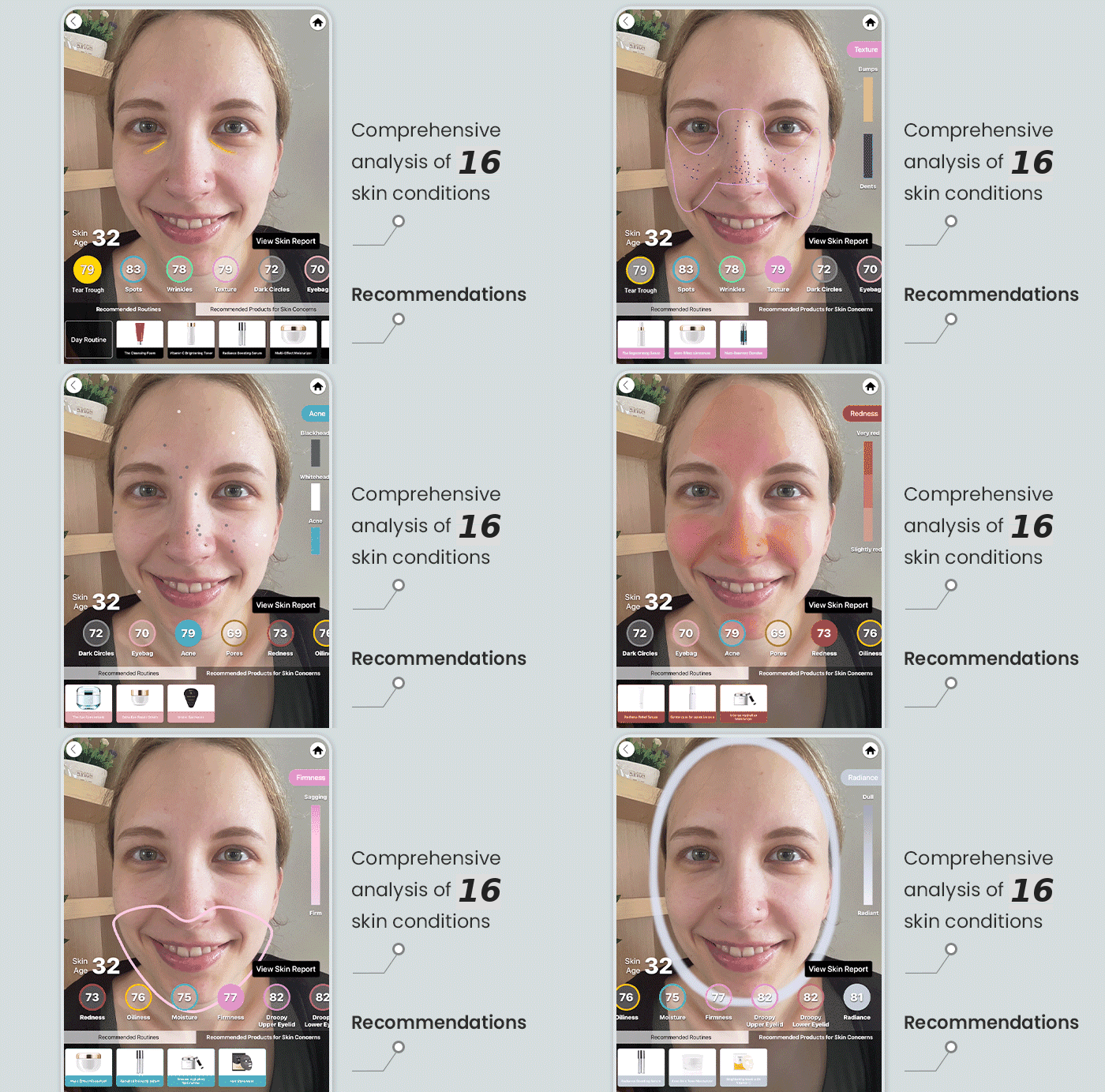
When a client submits a photo or uses a live camera, the model maps facial zones and simultaneously analyzes multiple parameters: fine lines and wrinkle depth, skin firmness, dark spot presence and distribution, pore size, oiliness, redness, radiance, and eye area condition. Skin age is derived from the combination of these aging-related indicators, measured against a reference distribution for that person's chronological age group.
The output isn't just a number — it's a ranked breakdown of which concerns are driving the skin age estimate, which gives both the client and the consulting professional something specific to work with.
One honest note: analysis quality does depend on image conditions. Good, even lighting and a clear frontal photo produce the most consistent results. This is manageable in a controlled retail or spa setting, but worth building into any consumer-facing self-service flow with clear guidance.
Finding the Right Skincare Routine for Your Skin Age
Knowing your skin age is only useful if it leads somewhere practical — which is where the real value of AI skin analysis sits.
Once a skin age and concern profile is established, an aesthetician can build a treatment recommendation that's actually calibrated to what's going on. Not "here's our best moisturizer," but "given your skin age reads 4 years above your chronological age and your primary drivers are firmness loss and uneven tone, here's a routine targeting those specifically."
Any skincare brand can map their own product catalog to the AI's concern outputs, so recommendations populate automatically based on the scan — making personalized guidance available at scale, not just in premium consultation settings. The same logic applies to online channels: a consumer who completes a skin analysis on a brand's website gets recommendations that reflect their actual scan data, not a quiz outcome.
The Business Case: Why Personalized Care Converts
From a brand or spa perspective, the commercial case for AI skin analysis rests on a few consistent patterns worth being specific about.
Recommendations with a reason perform better. When a customer receives a product suggestion tied to their scan results — "this serum addresses the firmness loss and early wrinkle pattern we detected" — the recommendation feels earned rather than generic. That shift in framing measurably affects conversion. Cetaphil, one of over 800 brands working with Perfect Corp.'s platform, put it this way: "We saw this was a great way to leverage AI technology — scanning someone's skin and giving them an AI-generated score identifying their skin status, and then giving them customized product recommendations and tips and tricks."
Staff consistency becomes achievable. A consultation quality problem — where a client's experience depends heavily on which staff member happens to be working — is one of the more persistent challenges in multi-location retail and spa environments. AI diagnostic tools give any staff member a credible, structured starting point for a skincare conversation, regardless of their personal expertise level. This doesn't replace training; it creates a floor that raises the average.
Progress tracking changes the retention dynamic. Spas and brands using Perfect Corp.'s platform can build client profiles that capture skin health scores over time. When a client returns after three months of following their recommended routine and their skin age score has dropped, or their firmness and radiance scores have improved — that's not a testimonial, it's data. Showing clients measurable progress is one of the more reliable drivers of long-term loyalty and referral, precisely because it makes the subjective ("my skin looks better") objective.
Decorté, which integrated the technology into their customer journey, described it this way: "When we saw that Perfect Corp. used 70,000 clinical images and validated results with all these dermatologists and skincare experts, we knew we could use this to help our customers achieve the results and the aspirations they have for their skincare and makeup."
Tracking Progress: Where AI Analysis Earns Long-Term Trust
One aspect of AI skin diagnostics that doesn't get enough attention is the longitudinal value — what happens when you use it not as a one-time scan but as a recurring measure of skin health over time.
Most skincare brands sell products. Fewer actually help clients track whether those products are working. The brands that do — that can show a client their skin age trending down over six months of consistent use, or demonstrate improvement in specific concern scores — occupy a fundamentally different position in that client's mind. They're not a product vendor; they're a skin health partner.
This is operationally simple to implement with the right platform: scan at intake, scan at follow-up visits, compare results. The technology handles the measurement; the staff handles the conversation around what the numbers mean. When that conversation goes well — when a client sees that their dark spot score has improved and their firmness is trending in the right direction — it changes the nature of the relationship.
"Showing clients that their skin has measurably improved is one of the strongest retention tools a spa has — and it's one most brands are still leaving on the table."
Where to Go From Here
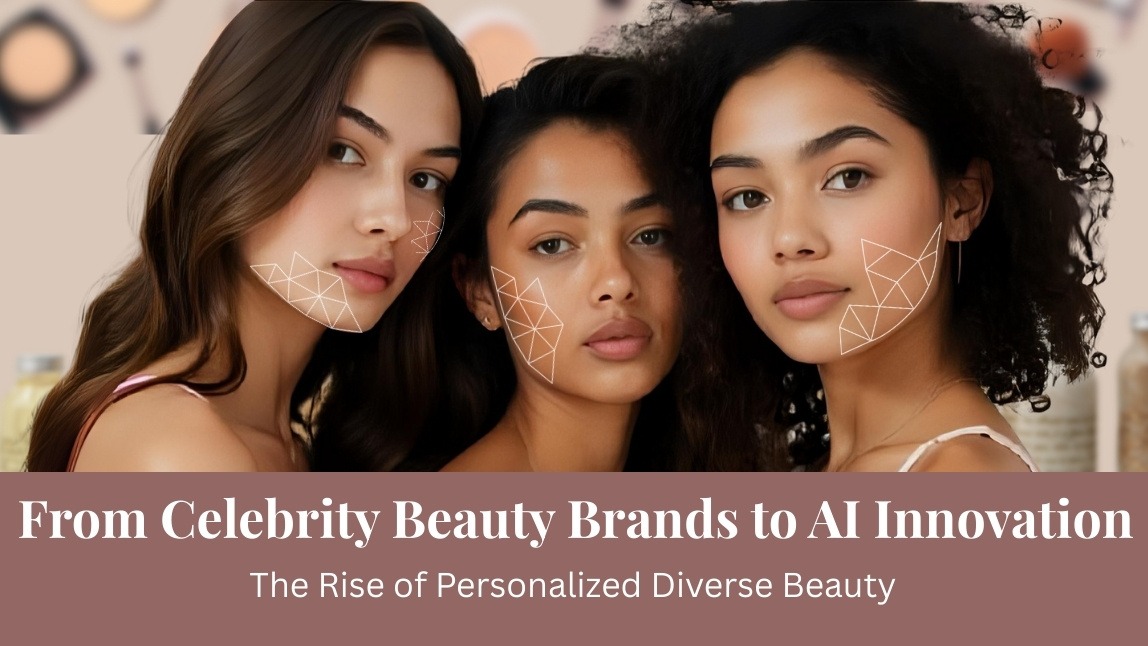
AI skin analysis tools have become practically accessible for brands and clinics at most budget levels, but capability and accuracy still vary significantly. The metrics worth asking about before choosing a platform: What dataset was the model trained on? Is there published accuracy data? How does it handle diverse skin tones? Does the platform support progress tracking and CRM integration, or just one-off scans?
Perfect Corp.'s AI skin analyzer and online skin analysis platform is one of the more thoroughly validated options available — 28 diagnostics across 16 skin concerns, dermatologist-verified accuracy, HD and SD modes for clinical vs. quick-scan use cases, and deployment flexibility across in-store iPads, web integration, and API. It's used by brands including Cetaphil, Decorté, and Bakel, and has a free trial available for the Skincare Pro app for businesses evaluating it in a real clinical or retail context.
Knowing a client's skin age is, as it turns out, not just a useful data point for them. It's the foundation of a more honest, more specific, and more effective skincare conversation — which is the thing both consumers and brands actually want.



 Author: