 Author:


An educational guide to AI skin assessment technology — how it works, where it's being deployed, and what it actually delivers for beauty businesses.
| Table of Contents |
|---|
|
Understanding AI Skin Analysis
Personalization has become the defining expectation in skincare retail — and the gap between what consumers want and what most consultation formats can reliably deliver is where AI skin analysis is finding its footing.
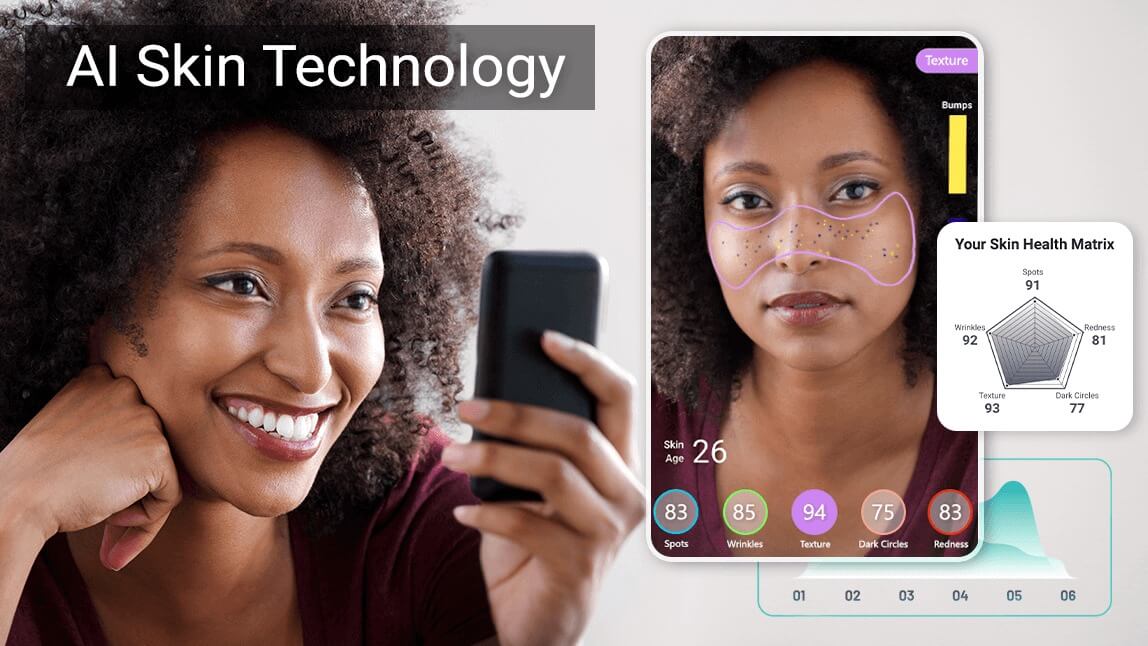
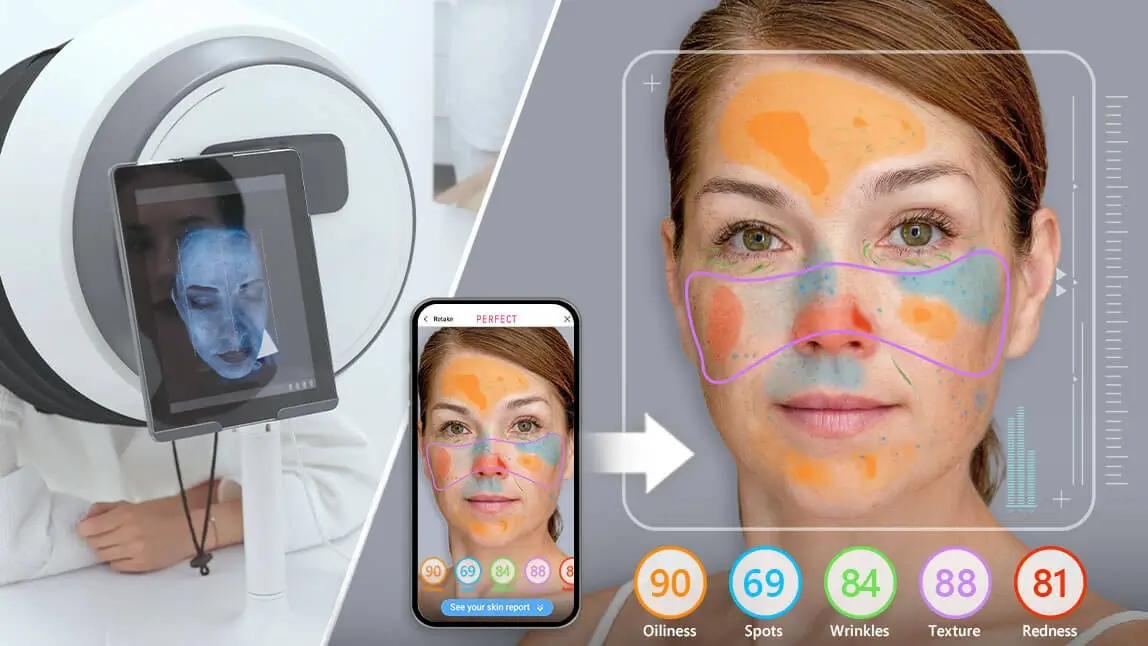
In practice, AI skin analysis refers to software that uses computer vision, machine learning models, and imaging algorithms to evaluate visible skin characteristics from a photo or live camera input. The technology can assess wrinkles, pore size, acne lesions, pigmentation irregularities, redness, texture, and estimated hydration levels — typically within seconds, and without requiring a trained clinician to interpret the results.
"The most commercially significant shift isn't the accuracy of the analysis itself — it's the ability to deliver a consistent, personalized consultation touchpoint at every customer interaction, regardless of staff experience level." — Beauty Tech Industry Analyst perspective

That last point matters operationally. For a mid-size skincare clinic or a specialty retailer with seasonal staff turnover, the inconsistency of human-led consultations is a genuine business problem. AI analysis doesn't replace clinical judgment, but it does raise the floor on what a first consultation looks like.
AI skin analysis can be integrated into physical clinic environments via tablet-based systems, embedded into e-commerce platforms through SDKs, or deployed as white-labeled consumer-facing apps. The deployment model depends heavily on the business type, customer journey, and whether the goal is lead generation, consultation efficiency, or product recommendation conversion.
For businesses evaluating this category, the key questions aren't just technical — they're operational: How does the output fit into your existing consultation workflow? How are recommendations connected to your product catalog? And how do you handle the privacy and data considerations that come with collecting biometric-adjacent skin data?
This article addresses all of those questions. If you've already decided to explore a platform, the AI Skin Analysis for Business product page covers deployment options and enterprise features in detail.
Why the Industry Is Paying Attention Now
The beauty industry's interest in AI diagnostics didn't emerge overnight. It's the intersection of several converging pressures: rising consumer expectations for personalization, the operational strain of scaling quality consultations, and the maturation of computer vision models trained on diverse skin datasets.
On the demand side, consumer behavior has shifted considerably. Shoppers — particularly in the prestige skincare segment — increasingly expect a diagnostic layer before purchasing. The "find my routine" model, popularized by direct-to-consumer brands, has conditioned a generation of buyers to expect some form of skin assessment before committing to a regimen. When that expectation isn't met, brands see higher return rates and lower repeat purchase frequency.
"Personalization in skincare is no longer a differentiator — it's a baseline expectation. The brands that still rely entirely on sales associate intuition for product matching are operating with a structural disadvantage." — Skincare retail consultant perspective
On the supply side, the economics have improved. Early AI skin analysis tools required expensive proprietary hardware, and the outputs were inconsistent across lighting conditions. Current-generation systems operate on standard iPad or smartphone cameras with reasonable accuracy in typical retail or clinic environments — removing the hardware barrier that made earlier deployments impractical for mid-market operators.

The med spa and aesthetic clinic segment is particularly active in adoption. These businesses sit at an interesting intersection: they have clinical credibility but high client volume, which creates pressure to make pre-treatment consultations more efficient. AI skin analysis fits naturally into the intake workflow — allowing practitioners to review a standardized skin baseline before any hands-on assessment begins.
For retail operators, the business case centers on conversion. AI skin assessments used at point-of-purchase — whether in-store kiosk or embedded online — show measurable improvement in add-to-cart behavior and basket size, because the recommendation is anchored to a specific, visible skin concern rather than a generic "best for your skin type" prompt.
According to industry adoption data, beauty retailers that have integrated AI skin diagnostics into their digital customer journeys report increased consultation engagement and higher product attachment rates — though outcomes vary significantly by how the tool is positioned within the purchase funnel.
The implication for brands isn't that AI replaces their consultation model — it's that it gives them a scalable, data-consistent foundation to build one around.
Shared Materials by Strapi
*Adjust the size of images ONLY. Please go to Strapi to edit the materials info.
How the Technology Actually Works
Understanding what AI skin analysis can and cannot do requires a basic grasp of the underlying technology — which is more constrained than most marketing materials suggest, but also more capable than most skeptics assume.
At its core, the system uses convolutional neural networks (CNNs) trained on large datasets of annotated skin images. The model has learned to identify visual patterns associated with specific skin conditions — the texture signatures of enlarged pores, the pigmentation contrast of dark spots, the surface geometry associated with fine lines. When a new image is submitted, the model maps what it sees against those learned patterns and returns a set of condition scores.
"It's pattern recognition at scale, not diagnosis. The distinction matters — both for setting accurate expectations with clients and for understanding where the technology's reliability boundaries actually are." — AI product implementation specialist perspective
What current systems assess reliably:
- Surface-level conditions visible in standard lighting: acne, visible pores, surface pigmentation, redness
- Texture analysis: fine lines, skin roughness
- Bilateral symmetry and tone distribution
What they assess with more variability:
- Deep hydration levels (inferred, not measured directly)
- Sub-surface conditions that require imaging beyond standard camera sensors
- Accurate detection across all Fitzpatrick skin tones, depending on training data quality
Lighting is the most common implementation variable that affects output consistency. A system calibrated for controlled studio lighting will perform differently under warm retail ambience or fluorescent clinic lighting. Production-grade platforms typically include image quality checks that flag poorly lit inputs before processing — but this adds a step to the workflow that needs to be accounted for in staff training.
Processing typically happens server-side via API call, with results returned in two to four seconds. For enterprise deployments, latency and data residency become relevant considerations — particularly in markets with stricter biometric data regulations.
The recommendation layer — where skin condition scores translate into specific product suggestions — is technically separate from the analysis layer and is usually configured by the brand or operator. This means the quality of the product recommendation depends not just on the AI model, but on how well the operator has mapped their product catalog to specific skin conditions and concerns. That configuration step is frequently underestimated in deployment timelines.
Business Benefits: What the Data Shows
The commercial case for AI skin analysis is real, but it's worth separating the well-supported benefits from the more speculative ones.

Consultation efficiency is the most consistently documented benefit. In clinic environments, AI-assisted intake assessments reduce the time practitioners spend on baseline skin evaluation, allowing them to focus the consultation on treatment planning and patient education. For high-volume med spas running back-to-back appointments, this efficiency gain is tangible — practitioners report being able to enter the room with a skin baseline already established, which improves both the quality and the pace of the interaction.
Recommendation consistency is a less-discussed but commercially significant benefit for retail operators. In a chain with multiple locations and varying levels of staff experience, AI analysis creates a consistent diagnostic baseline that anchors product recommendations to objective criteria rather than individual staff intuition. This matters for brand trust — a customer who receives conflicting recommendations across two visits is less likely to commit to a regimen.
"The ROI of skin analysis tools in retail isn't always captured in immediate conversion data. Some of the most durable value is in recommendation consistency — which drives the repeat purchase behavior that makes skincare a high-lifetime-value category." — Beauty retail operations perspective
Personalized product discovery drives measurable conversion improvements, particularly in e-commerce. When a product recommendation is tied to a specific visible skin concern that a customer just saw in their own analysis results, the purchase motivation is clearer and the objection threshold is lower. Basket size tends to increase because multi-step routines — serum, moisturizer, SPF — can be justified against multiple identified conditions simultaneously.
Data accumulation is a longer-term benefit that's underappreciated at the evaluation stage. Businesses that consistently run skin analyses build a proprietary dataset of their customer base's skin concerns over time. This has genuine value for product development decisions, marketing segmentation, and treatment protocol refinement — but only if the data is being captured and analyzed, which requires deliberate system design from the outset.
The more cautious observation: businesses that deploy AI skin analysis without updating their consultation workflow or staff training don't always capture these benefits. The technology creates the opportunity for better client engagement, but the conversion of that opportunity depends on how the human interaction is designed around it.

Key Use Cases by Channel
Skincare Clinics and Medical Spas
In clinic environments, AI skin analysis fits most naturally into the intake and pre-consultation phase. The practical workflow: a client completes a brief skin scan — typically on a tablet at reception — before seeing the practitioner. The clinician reviews the AI-generated baseline alongside the client's treatment history, which allows the in-room consultation to focus on interpretation and treatment options rather than baseline observation.
For multi-location aesthetic clinic groups, this creates a meaningful operational advantage: a standardized pre-consultation format that ensures every practitioner starts with the same quality of skin documentation, regardless of location or staff seniority.

Progress tracking is another high-value use case in clinical settings. Serial skin analyses — taken at intake and at follow-up appointments — create a visual and quantitative record of treatment outcomes. This serves both the clinical relationship (clients can see measurable change) and the marketing function (before/after documentation that is objective rather than curated).
"In high-volume aesthetic practices, AI skin analysis has moved from novelty to workflow standard. The practices that use it most effectively have redesigned the consultation sequence around it — not just bolted it on." — Medical spa operations consultant perspective
Specialty Retail and Department Store Beauty Counters
For prestige skincare retail, the most effective deployment model positions AI analysis as a service, not a sales tool. Customers who engage with an in-store skin analysis station are typically more receptive to product recommendations because the consultation feels diagnostic rather than transactional.
The challenge for retail operators is the translation layer: turning skin condition scores into specific product recommendations requires an accurate and well-maintained product mapping. This is an ongoing operational task — as products are discontinued or added, the recommendation logic needs to be updated. Brands that treat this as a one-time setup rather than a continuous process typically see declining recommendation relevance over time.
E-Commerce and Digital Platforms
Online skin analysis — embedded as a feature within an e-commerce skincare section — addresses one of the fundamental conversion challenges in digital beauty retail: the absence of in-person consultation. When a consumer can complete a quick skin assessment and receive a personalized routine recommendation before browsing products, the path to purchase is more structured and the recommendation feels more grounded.
The data privacy consideration is more prominent here than in controlled clinic environments. Consumers are increasingly aware of what happens to selfie images submitted to brand platforms. Clear, plain-language privacy policies — and ideally on-device processing for the image capture step — are becoming standard expectations rather than optional trust-builders.
API and SDK Integration for Platform Builders
For brands or technology platforms looking to embed AI skin analysis into proprietary systems, API-based integration allows the analysis capability to be incorporated without rebuilding the underlying models. The practical implication is that a brand can add skin analysis to an existing mobile app or website with relatively modest development effort — the API handles image processing and condition scoring, while the brand controls the front-end experience and recommendation logic.

Perfect Corp.'s AI Skin Analysis API and enterprise SDK options provide this kind of infrastructure, allowing brands to deploy professional-grade analysis within their own digital environments.
AI Skin Analysis vs. Traditional Methods
The relevant comparison for most businesses isn't between AI analysis and dermatology — it's between AI analysis and the consultation formats they're actually using today: staff-led visual assessments, paper-based skin questionnaires, or no structured consultation at all.
| Dimension | Staff-Led Visual Assessment | Questionnaire-Based | AI Skin Analysis |
| Consistency | Variable — dependent on individual staff skill and engagement | Consistent format, but relies on self-reported data | Consistent output regardless of operator |
| Scalability | Requires trained staff at every touchpoint | Scales easily, but low engagement and accuracy | Scales across channels with API/SDK integration |
| Objectivity | Subjective — prone to upsell pressure perception | Self-reported — accuracy depends on customer knowledge | Objective visual assessment with quantified scores |
| Client Engagement | High when done well; inconsistent across staff | Low — typically feels like admin | High — particularly when results include visual imagery |
| Implementation Complexity | Low — already exists in most formats | Very low | Moderate — requires workflow integration and staff training |
| Ongoing Maintenance | Training and re-training staff | Minimal | Product mapping updates; model retraining by vendor |
| Data Value | Rarely captured systematically | Captured but limited by self-report accuracy | High — objective baseline data with longitudinal value |
The practical conclusion: AI analysis doesn't obsolete human consultation — it's most effective when it precedes and structures it. Businesses that position AI analysis as a replacement for staff interaction typically see lower client satisfaction than those that use it as a consultation enhancement tool.
"The businesses getting the most operational value from AI skin analysis are those that have redesigned their consultation sequence around the data — not just added the technology as an optional extra." — Beauty technology deployment consultant perspective
For businesses operating at scale — multiple locations, high client volume, or digital-first channels — the consistency and data advantages of AI analysis are proportionally more valuable than they are for a single-location boutique spa where practitioner relationships drive retention.
Honest Limitations and Implementation Challenges
A credible evaluation of AI skin analysis requires acknowledging where the technology has genuine constraints — not to discourage adoption, but because understanding the limitations is necessary for designing a deployment that performs well in practice.
Lighting and image quality variability is the most common source of inconsistent results. Consumer-grade cameras in varied lighting environments produce meaningfully different inputs. Most enterprise systems include image quality validation steps, but this adds friction to the user experience and requires clear in-app guidance to capture consistently usable images.
Training data representation affects accuracy across diverse skin tones. Models trained predominantly on lighter Fitzpatrick skin types show reduced accuracy on darker skin tones — a documented limitation in AI dermatology tools broadly. When evaluating vendors, it's worth asking specifically about their training dataset composition and validation methodology across skin tones. This is both an accuracy consideration and a customer trust consideration for brands serving diverse markets.
"Dataset diversity is the most underexamined variable in AI skin analysis vendor selection. The performance gap across skin tones isn't always visible in headline accuracy metrics — you need to probe specifically for validated performance on Fitzpatrick types IV through VI." — AI model evaluation specialist perspective
Customer skepticism is a real adoption barrier, particularly in clinic and professional settings. Some clients — especially those who have had skin analysis tools upsell them aggressively in retail settings — approach the technology with reasonable skepticism. Positioning the analysis as a diagnostic baseline rather than a purchase trigger, and being transparent about what it does and doesn't assess, is more effective than over-claiming the technology's capabilities.
Workflow integration complexity is frequently underestimated. Connecting the analysis output to a product catalog, an appointment booking system, or an electronic medical record isn't technically complex, but it requires deliberate design and ongoing maintenance. The analysis layer and the recommendation layer are separate systems — and the quality of the end-to-end experience depends on how well they're connected.
Privacy and data governance is an increasingly important consideration. Facial images are biometric-adjacent data in many regulatory frameworks. Businesses collecting and processing skin analysis images need clear data retention policies, informed consent mechanisms, and — particularly for e-commerce deployments — transparency about server-side versus on-device processing.
Over-reliance risk is worth flagging for clinical environments specifically. AI skin analysis excels at surface-level visual assessment, but it doesn't replace clinical judgment for conditions that require professional evaluation. Clear communication about what the tool assesses — and what falls outside its scope — is important for maintaining appropriate clinical standards.
Where the Industry Is Heading
The current state of AI skin analysis represents an early commercial phase, not a mature one. The technology works well enough to generate real business value today, but the trajectory of development points toward meaningfully more capable systems over the next three to five years.
Several directional shifts are worth tracking for businesses making medium-term technology decisions.
Multimodal analysis — combining camera-based visual assessment with spectroscopy, environmental data, or wearable inputs — is moving from research into early commercial deployment. Current-generation tools are limited to what's visible on the skin surface. Next-generation tools will incorporate sub-surface skin data and environmental context (UV exposure, humidity, pollution levels), allowing for more precise and dynamic recommendations.
"The limiting factor in AI skin analysis isn't the AI — it's the input data. As the sensor layer improves, the analytical capability will follow. Brands that are building data infrastructure now will be better positioned to leverage richer inputs when they become available." — Beauty technology strategist perspective
Longitudinal personalization is an area where early movers are building durable competitive advantages. Businesses that systematically track client skin data over time can offer genuinely personalized progression-based recommendations — not just "this is good for your skin type" but "your barrier function has improved since March and you're now a candidate for a stronger retinoid." This level of personalization requires data accumulation over time, which means the window to start building that data asset is now.
Regulatory attention is increasing. The FDA's existing framework for software as a medical device (SaMD) is relevant for AI tools that make or support clinical claims. As AI skin analysis moves further into clinical environments, the distinction between cosmetic assessment and medical-adjacent recommendation will attract more regulatory scrutiny. Brands deploying in medical settings should be tracking this landscape.
Competitive standardization is coming. AI skin analysis is currently a differentiator; within three to five years, it will likely be a baseline expectation for prestige skincare brands and aesthetic clinic operators. The businesses building competency in deploying, interpreting, and acting on AI skin data now are building institutional knowledge that will be genuinely difficult for later adopters to replicate quickly.
The operational implication is straightforward: the question isn't whether to incorporate AI skin analysis into your service model, but how to sequence the adoption in a way that builds long-term data and workflow advantages rather than just adding a feature.
Choosing the Right Solution for Your Business
Selecting an AI skin analysis platform is fundamentally a workflow decision, not just a technology one. The analysis accuracy of leading enterprise platforms is broadly comparable — what differentiates them in practice is how well the output integrates with your existing consultation format, product catalog, and CRM infrastructure.
For businesses evaluating options, the operational questions matter as much as the technical ones:
- How does the recommendation output connect to your product catalog? Is the mapping static or dynamically updated? Who maintains it?
- What does the client-facing interface look like? Does it build confidence in the assessment, or does it feel generic?
- How does the data integrate with your existing client management system? Is there a usable API for pulling analysis history into your CRM?
- What does vendor support look like for model updates? Skin analysis models improve over time — understand the update cadence and what it means for your outputs.
- What are the data residency and privacy terms? Particularly relevant for clinics and for brands operating in GDPR or CCPA jurisdictions.
"The vendors worth evaluating seriously are the ones that can walk you through a deployment scenario specific to your workflow — not just a demo. The gap between a polished demo and a production-quality implementation is where most AI beauty technology projects struggle." — Enterprise beauty technology consultant perspective
For clinic and med spa operators, the priority is consultation workflow integration and the quality of the clinical-grade condition taxonomy. Look for systems that have been validated in clinical environments and offer practitioner-facing dashboards with longitudinal tracking.
For retail and e-commerce operators, the priority is recommendation accuracy and ease of catalog integration. SDK flexibility and the ability to customize the recommendation logic to your brand's product architecture matters more than raw analysis capability.
For platform builders and enterprise brands, API quality, data residency options, and the vendor's roadmap for multimodal capability are the most forward-looking evaluation criteria.
Perfect Corp.'s AI Skin Analysis platform is built for enterprise-scale deployment across all three of these contexts — with dedicated solutions for clinics, retail, and API integration. It's a credible option for businesses that need a production-grade system with established deployment track record across beauty brands and clinic operators. The Skincare Pro free trial provides a practical way to assess the output quality and workflow fit before a full integration conversation.

For businesses at an earlier stage of evaluation — still defining what role AI skin analysis should play in their model — the more useful starting point is a workflow audit rather than a technology demo. Identify the specific consultation touchpoints where inconsistency, inefficiency, or limited personalization is creating measurable business friction, and evaluate AI analysis solutions against those specific needs.
This article is part of Perfect Corp.'s resource library on AI beauty technology. For platform specifications, integration documentation, and enterprise pricing, visit the AI Skin Analysis for Business product page.