 Author:


Images generated by YouCam AI
Personalization has become the baseline expectation in skincare retail — not a differentiator. Consumers walking into a beauty counter, booking a med spa facial, or browsing a DTC skincare brand online increasingly expect the experience to reflect their specific skin, not a generalized skin type. That shift is putting pressure on every layer of the business, from how consultants are trained to how product recommendations are generated at scale.
For many brands and clinics, the traditional approach — a staff member asking a few questions or eyeballing skin condition under store lighting — is neither consistent nor scalable. The variance in consultation quality from one associate to the next, or from one store location to another, is a known operational challenge that erodes customer trust over time.
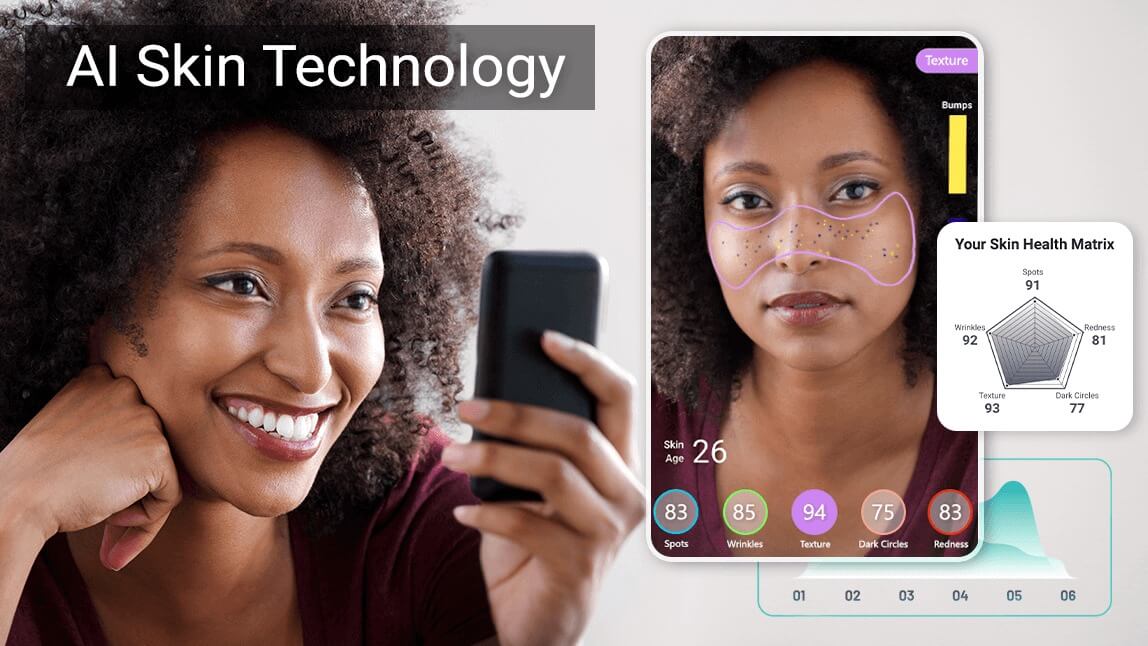
This is where AI skin readers and skin analysis technology are making a measurable difference. Rather than replacing the human element in skincare consultation, a well-implemented skin reader provides a consistent, objective baseline — something both the customer and the consultant can reference and trust. As one beauty retail technology strategist put it: "The goal isn't to automate the skincare consultation. It's to give every consultant the same starting point, regardless of their experience level."
Perfect Corp.'s AI Skin Reader addresses this need through an API-first approach — one built specifically for businesses that need to deploy skin analysis across digital touchpoints, in-store devices, or clinical platforms without rebuilding their tech stack from the ground up.
Why AI Skin Analysis Is Moving from Novelty to Standard Practice
A few years ago, AI skin scanners were mostly a marketing activation — something brands wheeled out at trade shows or pop-up events for novelty value. The underlying technology has matured considerably since then, and so has the business rationale for deploying it.
According to McKinsey's Beauty Industry report, personalization is now a primary driver of customer retention in premium skincare. Brands that deliver genuinely relevant product recommendations — based on actual skin condition rather than demographic assumptions — see measurably higher repurchase rates and stronger loyalty metrics. The challenge is delivering that at scale.
Several structural shifts are accelerating adoption:
In retail and e-commerce, the inability to replicate in-store consultation online has long been a friction point. AI skin analysis bridges that gap by giving customers a guided, data-backed entry point into product discovery without requiring a human consultant to be present.
In med spas and dermatology clinics, the operational context is different. Practitioners are dealing with high patient volumes, the need for treatment progress documentation, and the challenge of communicating subtle skin changes to clients in a way that motivates compliance. A skin scanner that provides before/after visual comparisons is a more effective communication tool than verbal descriptions alone.
In beauty brand DTC channels, skin analysis serves a dual commercial purpose: it improves product-to-customer fit (reducing returns and increasing satisfaction), and it generates first-party skin health data that brands would otherwise never have visibility into.
The common thread across all these contexts is that AI skin analysis is solving a real operational problem — not just adding a technology layer for its own sake.
How Perfect Corp.'s AI Skin Reader Works
Perfect Corp.'s skin reader is built on deep-learning models trained on one of the industry's largest labeled datasets of facial skin images, covering diverse skin tones, ages, and conditions across global demographics. That breadth matters — many early AI skin tools struggled with accuracy for darker skin tones, a limitation that reflected the datasets they were trained on rather than any inherent technical ceiling.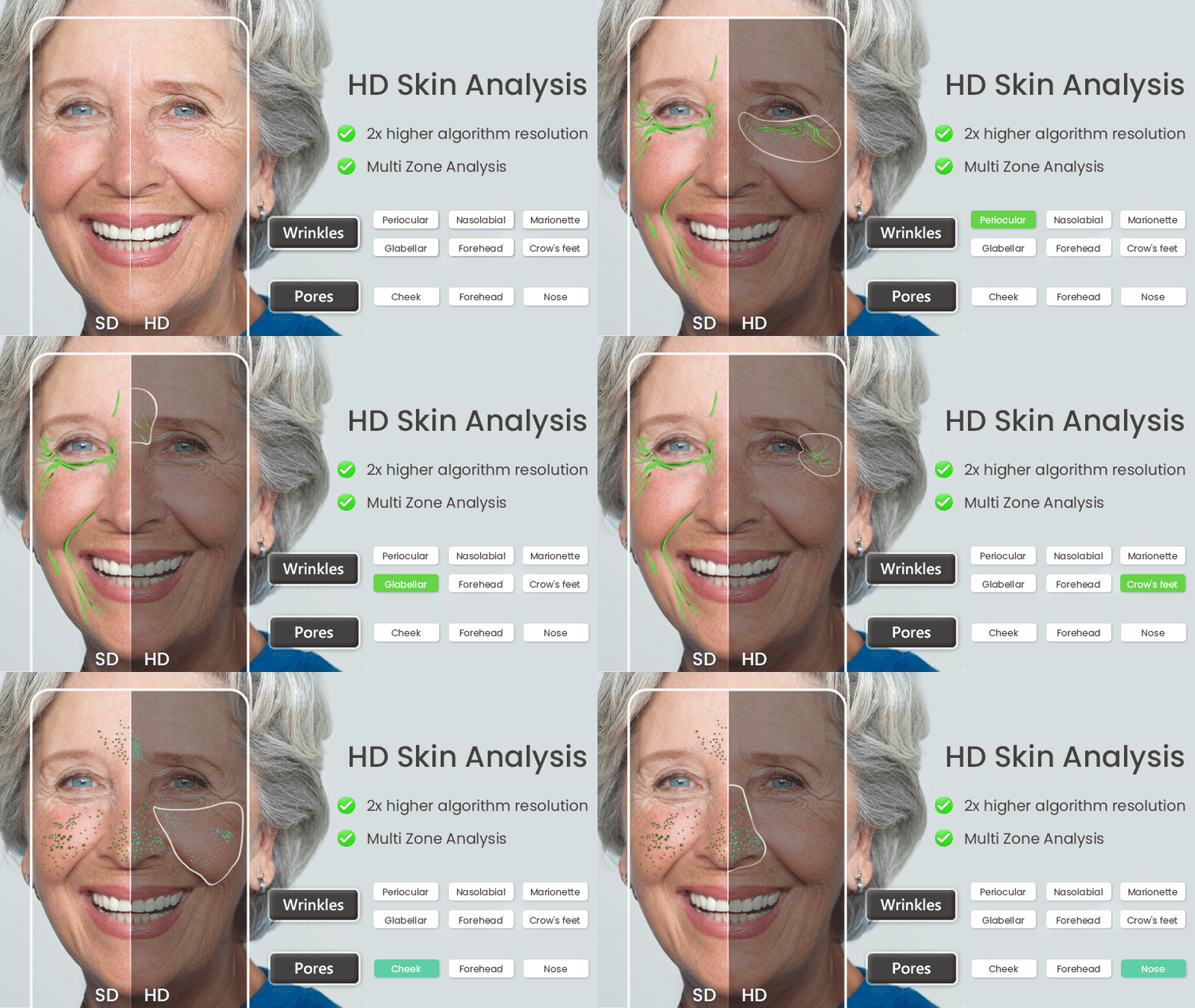
The system runs 28 diagnostics across 16 skin concerns through a standard photo or live camera input, including:
- Fine lines and wrinkles
- Pores and texture
- Pigmentation and dark spots
- Skin hydration and oiliness levels
- Under-eye conditions
Analysis is delivered in real time, typically within seconds of image capture. Results are benchmarked against the full skin concern database, giving businesses a percentile-style view of where a customer's skin sits relative to their age group — a framing that customers find more meaningful than abstract scores.
"Speed matters operationally," noted a skincare retail technology consultant familiar with in-store deployment. "If the skin analysis step adds more than 30 seconds to a consultation, staff start skipping it. The fact that results come back in real time is what makes it actually usable in a retail workflow."
The underlying architecture is cloud-based, which means businesses aren't managing on-premise model updates or hardware refresh cycles. When the AI models are retrained or improved, those updates roll out automatically through the API.
A practical note on limitations: Like any computer vision system, accuracy is sensitive to input quality. Poor lighting, heavy makeup, and low-resolution cameras will degrade results. Businesses deploying skin readers in physical locations — particularly med spas and clinics — should standardize their capture environment as part of implementation. This isn't unique to Perfect Corp.'s solution; it's a category-wide constraint that any serious vendor will acknowledge.
Why the API-First Approach Matters for Business
The most consequential architectural decision in any skin analysis deployment isn't which AI model to use — it's how the technology integrates with existing systems and customer touchpoints.
Perfect Corp.'s Skin Reader API is designed as the primary integration path, and that prioritization reflects where the real operational value lies. Rather than a standalone app or kiosk that sits adjacent to a brand's digital ecosystem, the API embeds directly into existing platforms — e-commerce sites, mobile apps, in-store tablet systems, or clinical practice software.

The practical advantages of this approach:
Consistency across channels. When the same analysis engine powers both the website experience and the in-store consultation, customers get consistent results and recommendations regardless of where they interact with the brand. That consistency is harder to achieve than it sounds — and it's operationally significant for brands managing both digital and physical retail.
Data ownership. An API integration means skin analysis results flow into a brand's own data environment, where they can inform product recommendations, CRM segmentation, and repurchase triggers. A standalone kiosk generates data that typically lives in a vendor's system, not the brand's.
Customization without rebuilding. Businesses can apply their own product catalog logic, recommendation rules, and brand voice on top of the AI output. The AI handles the diagnostic layer; the business controls what happens next.
Global deployment. The API supports multilingual output and has been validated across diverse skin types and demographics — a non-trivial requirement for any brand operating across markets.
For businesses evaluating their options, the API path is worth treating as the default assumption, not an advanced option. The operational benefits of integration over point solutions become apparent relatively quickly once deployment scale increases. You can explore the live skin analysis demo here to see how the experience looks from the customer's side.

Business Applications: What This Looks Like in Practice
Skincare Retail and E-Commerce
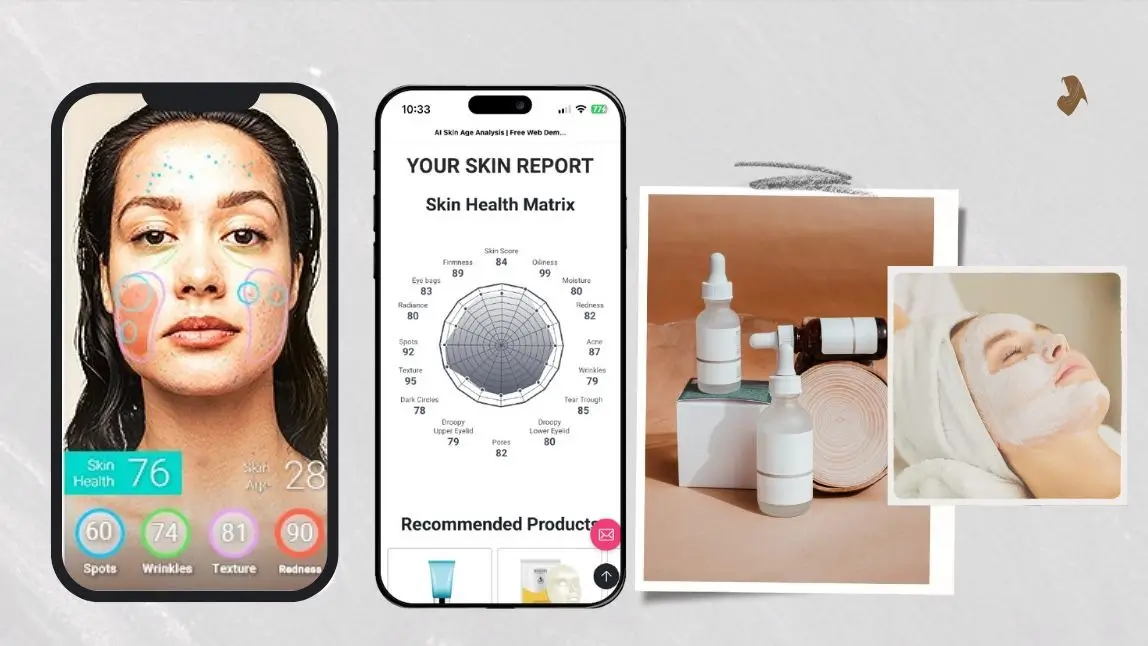
The most common deployment pattern in retail is using the skin reader as a product recommendation engine entry point. A customer completes a quick skin scan — either on the website or via an in-store iPad — and receives a curated product suggestion based on their specific skin concerns.
What makes this work commercially is the shift from generic to specific. "Your skin shows elevated pore visibility and early-stage dehydration" is a more compelling prompt for product purchase than a quiz result that assigns someone to a broad skin type. The specificity creates purchase intent.
Retailers using AI skin analysis report that customers who engage with the skin scanning step convert at meaningfully higher rates than those who don't — though the magnitude varies significantly by implementation quality and how tightly the recommendation logic is tuned to the product catalog.
Med Spas and Dermatology Clinics
In clinical settings, the skin reader serves a different primary function: documentation and progress tracking. A practitioner performing a series of facials, chemical peels, or laser treatments needs a consistent way to show clients their skin is responding to treatment. Verbal assurances work only so far; visual, data-backed comparisons are far more persuasive.
Clinics using AI skin scanner tools typically integrate the analysis into intake and follow-up workflows. The initial scan establishes a baseline. Subsequent scans at defined intervals — four weeks post-treatment, for example — provide objective before/after comparison that practitioners can review with clients. This improves treatment compliance and strengthens the case for continuing care.
There's also a staff consistency benefit. Clinics with multiple practitioners often find that AI-assisted assessment reduces inter-practitioner variability in how skin conditions are described and prioritized — a subtle but operationally meaningful improvement.
Beauty Brands and DTC
For brands without a physical retail presence, the skin reader solves a fundamental problem: how to replicate the consultation moment online. A customer uploading a selfie and receiving a specific, credible analysis of their skin concerns is a qualitatively different experience from filling out a generic product finder quiz.
Beyond the customer experience, the skin data itself has strategic value. Aggregated, anonymized skin concern data across a brand's customer base provides a level of insight into actual consumer skin health trends that survey-based research simply can't match.

Business Benefits: A Realistic Assessment
AI skin analysis tools are frequently oversold with blanket promises about customer engagement and conversion uplift. The reality is more nuanced, and businesses planning a deployment benefit from understanding what actually drives results.
Engagement is straightforward. Skin analysis tools consistently drive high interaction rates — they're interactive, personal, and provide something genuinely new. The challenge isn't getting customers to try them; it's converting that engagement into purchase behavior.
Conversion depends on recommendation quality. The AI analysis is only as commercially useful as the recommendation logic built on top of it. A skin reader that accurately identifies dehydration but recommends the wrong product tier, or fails to surface a best-seller, adds engagement without adding revenue. The analysis layer and the product recommendation layer need to be treated as equally important investments.
Trust is built through accuracy. Customers are increasingly skeptical of AI-generated outputs. A skin analysis result that customers perceive as generic or inaccurate — one that doesn't reflect what they see in the mirror — damages brand trust more than not having the feature at all. This is why dataset quality and ongoing model validation matter beyond the initial accuracy numbers a vendor might quote.
Staff adoption is a real variable in physical retail. In-store skin analysis tools succeed or fail largely based on whether frontline staff integrate them into their consultation flow. Training, workflow design, and management reinforcement all influence adoption rates. Technology selection is one factor; change management is another.
Scalability requires clean integration. The API-first approach solves the scalability problem at a technical level. But operational scalability — maintaining recommendation relevance, updating product catalogs, managing regional variation — requires ongoing investment beyond the initial integration.
As one independent beauty retail consultant observed: "The brands getting the most out of AI skin analysis are the ones that treat it as an operational capability, not a marketing feature. The investment is in the workflow, not just the widget."
Limitations and Honest Considerations
Any technology assessment that doesn't include limitations should be read with skepticism. AI skin readers are genuinely useful tools; they also have real constraints worth understanding before deployment.
Image quality sensitivity. Skin analysis accuracy is materially affected by lighting conditions, camera resolution, and whether the subject is wearing makeup. Brands deploying in e-commerce contexts — where users submit photos taken under all kinds of conditions — should expect a meaningful percentage of analyses to produce lower-confidence results and build appropriate fallback experiences for those cases.
Fitzpatrick scale coverage. The industry has made significant progress on skin tone inclusivity in AI models, but businesses serving predominantly darker-skinned demographics should verify that a vendor's validation data reflects their customer base specifically. Aggregate accuracy numbers can mask performance variance across skin tones.
Customer privacy expectations. Facial analysis involves biometric data, and regulatory requirements vary significantly by market. GDPR in Europe, CCPA in California, and emerging frameworks in other markets all have implications for how skin scan data can be stored, used, and shared. Compliance review should be part of any serious implementation plan.
Over-reliance risk. In clinical settings particularly, there's a risk that AI analysis results begin to substitute for practitioner judgment rather than augment it. Practitioners should treat skin reader outputs as one data point among several, not as a definitive assessment. The best clinical deployments use AI analysis to surface concerns for professional review, not to replace the clinical eye.
Integration complexity at scale. The API integration is straightforward for standard use cases. Enterprise deployments across multiple markets, languages, or business units introduce complexity that requires dedicated technical resources to manage well.
The Broader Direction: Where AI Skin Analysis Is Heading
The current generation of AI skin readers is primarily diagnostic — they tell you what's happening with someone's skin now. The more consequential development on the near horizon is predictive and longitudinal: systems that track skin changes over time, identify trajectories, and personalize recommendations not just to current condition but to skin behavior patterns.
Several industry observers have noted that this longitudinal capability could fundamentally change the relationship between beauty brands and their customers. As Perfect Corp. Chief Strategy Officer Wayne Liu has suggested, the future of beauty AI isn't a single interaction — it's an ongoing, adaptive conversation between a brand's intelligence layer and each customer's skin health data over months and years.
The business implications are significant. A brand that understands how a customer's skin responds to seasonal changes, stress cycles, or ingredient interactions has a fundamentally stronger basis for product recommendation than one working from a single-point scan. That kind of depth is what separates a transactional skin analysis feature from a genuine competitive moat.
For businesses evaluating skin analysis technology today, the strategic question isn't just "which system is most accurate" but "which system positions us to build longitudinal skin intelligence as the technology matures." An API-first platform that keeps pace with model improvements — rather than a static hardware-based skin scanner — is a better bet against that longer horizon.
The broader beauty tech trajectory supports continued AI investment: global beauty tech is projected to exceed $13 billion by 2030, driven largely by personalization infrastructure. Businesses that have established skin analysis capabilities by the mid-2020s will be meaningfully ahead of those beginning the journey at decade's end.
Getting Started: What a Realistic Evaluation Looks Like
For businesses seriously evaluating AI skin analysis, the practical path forward involves a few distinct phases:
- Define the use case clearly first. Retail product recommendation, clinical documentation, and DTC personalization have different requirements. A system optimized for one context may not be the right fit for another.
- Evaluate integration requirements honestly. The API documentation is publicly accessible. A technical review of what integration actually requires — not just what a sales deck suggests — is worth doing before committing.
- Test with real customers, not lab conditions. Accuracy under controlled conditions is a necessary but insufficient test. How the system performs with actual customer photos, across the lighting conditions and device types your customers actually use, is the metric that matters.
- Plan the recommendation layer explicitly. The skin analysis output is the input to your product recommendation logic. That second layer — how you translate a skin concern assessment into a specific product suggestion — often requires as much development investment as the analysis integration itself.
Businesses ready to explore this in practice can try the live skin analysis demo to understand the end-to-end customer experience, or contact Perfect Corp.'s team to discuss API integration specifics.
The underlying technology is mature. The question now is execution — and that's a business problem, not a technology one.