Author: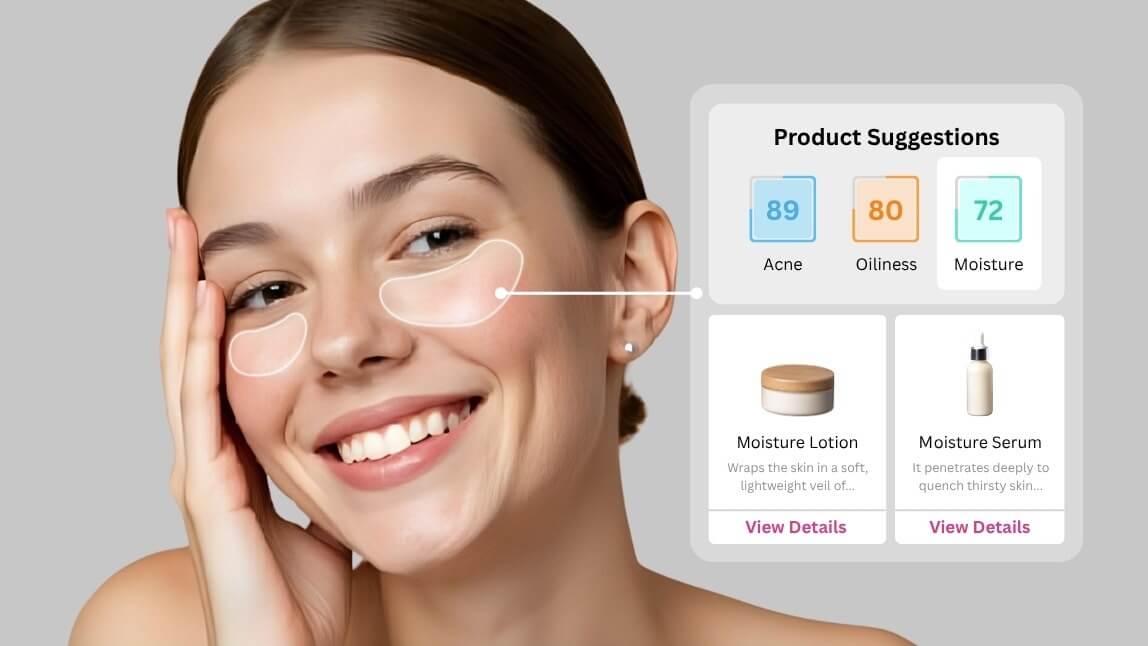
Most aesthetic businesses already know that upselling matters — the challenge is doing it without undermining the trust that brings clients back. Recommending an add-on treatment feels different when it's backed by a visual skin assessment rather than a staff script.
That dynamic is part of why AI skin analysis has gained traction beyond the flagship beauty counters and into mid-market med spas, dermatology clinics, and skincare retail. When a client can see their hydration deficit or UV damage score on a screen, the conversation shifts from "let me suggest something" to "here's what the data shows." The recommendation becomes consultative rather than transactional.
According to McKinsey's State of Fashion: Beauty report, personalization is now among the top three drivers of consumer loyalty in the beauty category — and notably, clients are increasingly willing to share skin data in exchange for more relevant product recommendations. That shift in consumer expectation is what makes AI skin analysis tools operationally meaningful, not just aesthetically interesting.
This article walks through how aesthetic businesses — from med spas to skincare retail — can use AI skin diagnostics to create upsell opportunities that feel earned rather than forced.
Why AI Skin Analysis is Changing Aesthetic Business Economics
The aesthetics industry has always operated on the tension between clinical credibility and retail revenue. Estheticians who push products too hard lose trust; those who stay purely service-focused leave revenue on the table. AI skin analysis changes that calculus by introducing an objective third party: the data itself.
The broader beauty retail market has been shifting toward diagnostic-led selling for several years. Sephora's Color IQ and similar in-store tools demonstrated early on that customers respond well to technology-assisted recommendations — not because the technology is inherently persuasive, but because it reduces the feeling of being sold to. The recommendation appears to come from an analysis, not a commission incentive.
For med spas and clinical skincare practices specifically, this matters operationally. A 2023 Accenture survey on health and wellness personalization found that 75% of consumers are more likely to purchase from a provider that personalizes recommendations based on individual data. In aesthetic contexts, that data is literally visible on the skin — AI analysis just makes it quantifiable and communicable.
"The most effective upsell is one the client initiates themselves after seeing their results." — A recurring observation in aesthetic business consulting, consistent with findings from the Professional Beauty Association's business development research.
What separates AI skin diagnostics from a standard skin consultation isn't speed — it's consistency. A well-calibrated AI system evaluates every client against the same criteria, which matters in multi-location businesses where staff experience varies significantly.
How Skin Analysis Creates Natural Upsell Pathways
Personalized Treatment Plans
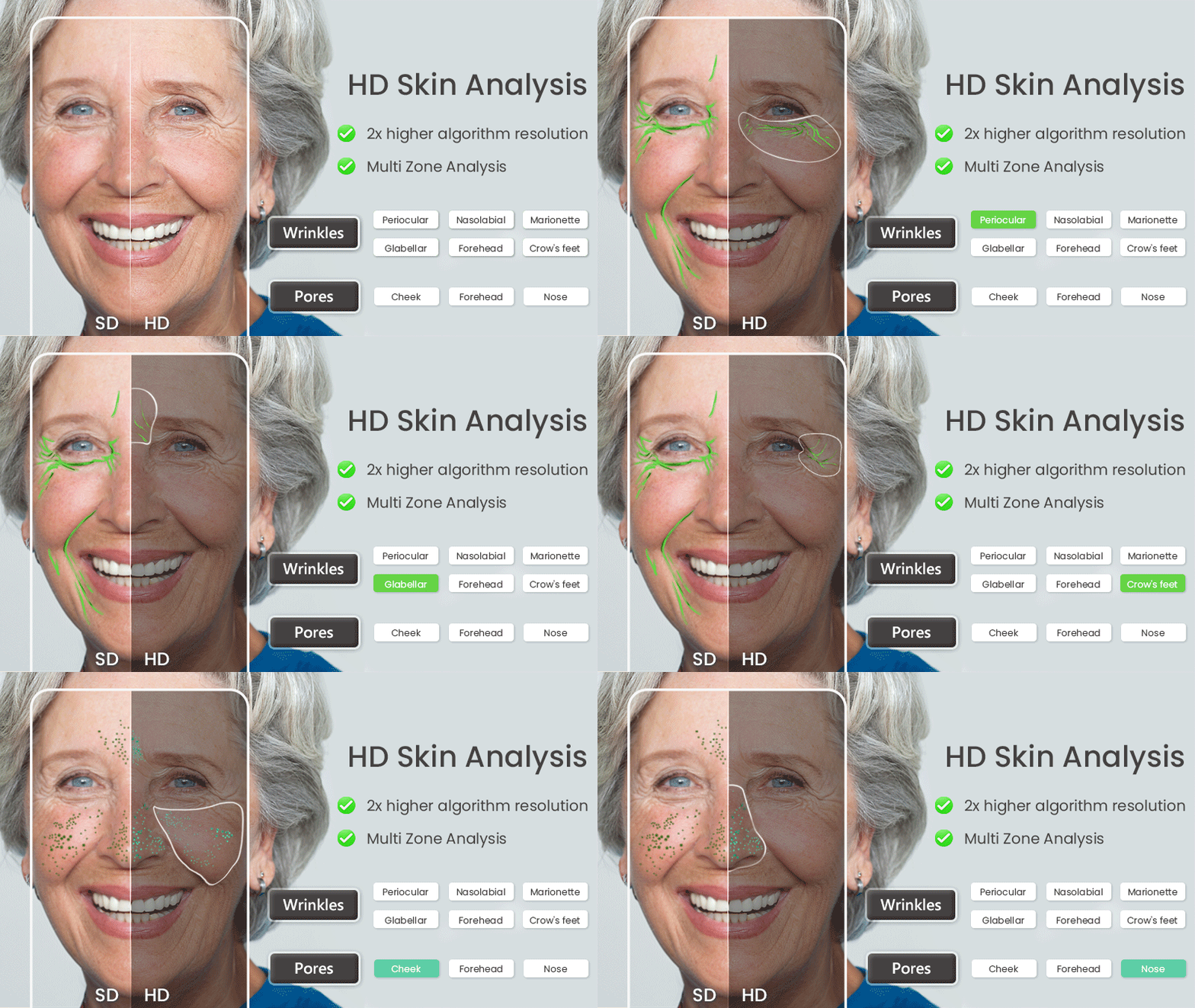
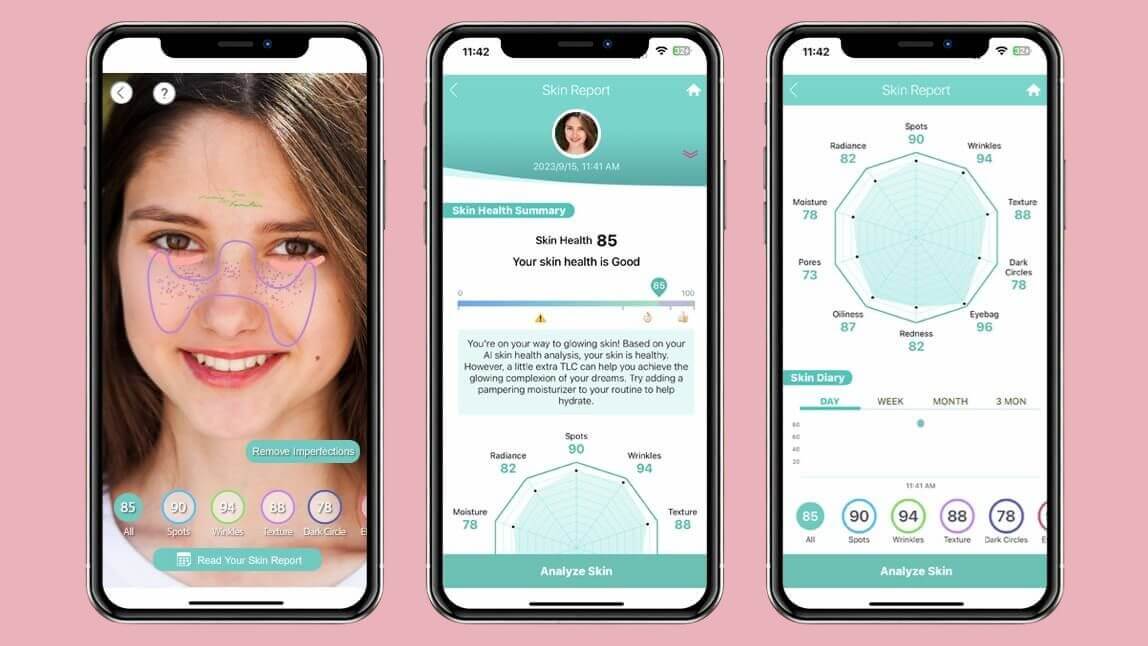
After an AI skin analysis, the results give estheticians a structured starting point for the treatment conversation. Rather than recommending a service from memory or general preference, staff can reference specific metrics — pore congestion score, fine line density, hydration levels — and explain why a particular treatment addresses what the analysis identified.
In practice, this looks like: a client books a standard facial, receives a pre-treatment skin scan, and the results show elevated transepidermal water loss alongside moderate UV damage. The esthetician can then credibly introduce a hydrating booster and a pigmentation-correcting add-on as targeted solutions rather than general upsells.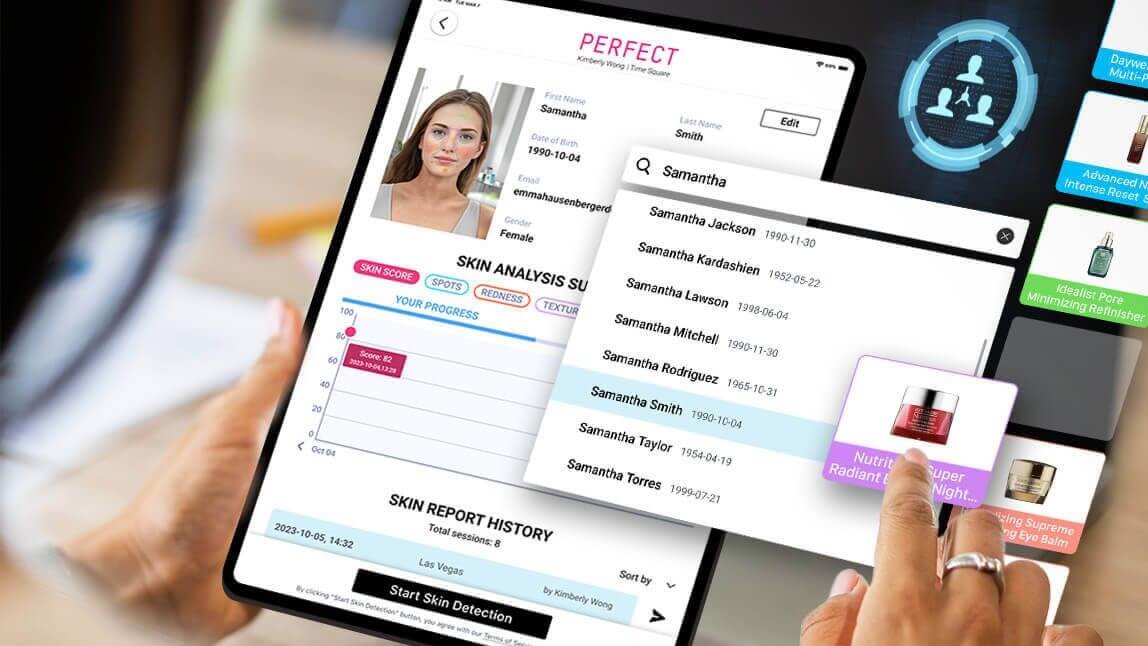
This approach is particularly effective for treatments like microneedling, LED therapy, or chemical exfoliants — services that benefit from measurable before-and-after tracking, which AI analysis naturally enables.
Product Recommendations Grounded in Skin Data
Skincare retail has a persistent recommendation credibility problem: customers are skeptical that staff product suggestions reflect their skin's needs rather than sales targets. AI analysis addresses this directly by generating product recommendations from objective skin parameters rather than staff judgment alone.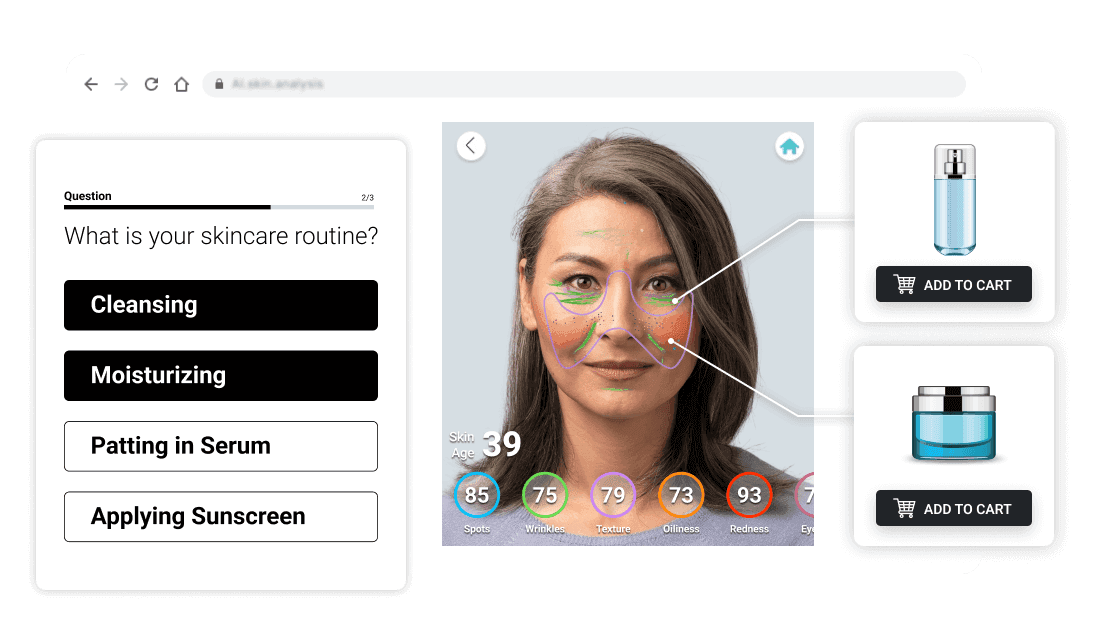
For a client with confirmed oily-dehydrated skin — a common combination that's frequently misread as simply "oily" — an AI-generated recommendation for a lightweight hyaluronic moisturizer rather than an oil-control product will often feel more informed and accurate than what they've been told before. That accuracy is commercially valuable; it increases the probability of purchase and, more importantly, the probability of the product working, which drives repurchase.
Mintel's 2024 Beauty & Personal Care report notes that 64% of UK beauty consumers say they would trust AI-generated skincare recommendations as much or more than a human advisor — a figure that has increased year-over-year since 2021.
Follow-Up and Series Treatments
AI skin analysis creates a natural framework for longitudinal treatment planning. If a client's initial scan shows moderate sun damage and early hyperpigmentation, a six-session brightening protocol becomes a data-supported recommendation rather than a sales pitch.
The key operationally is tracking results across visits. Clients who can see measurable improvement in their skin scores over time are significantly more likely to continue a treatment series — and more likely to refer. Integrating Perfect Corp’s AI and AR technology into brand platforms yields remarkable engagement metrics. Case studies demonstrate up to a 94% retention rate and a 60% boost in aesthetic clinic treatment bookings.
Membership and Subscription Structures
For clients with chronic skin concerns — acne, rosacea, accelerated aging — subscription-based care models make clinical sense. AI analysis provides the objective monitoring that justifies ongoing treatment frequency and gives clients a progress narrative rather than an open-ended financial commitment.
A quarterly skin scan cadence, for instance, creates a natural touchpoint to review product performance, adjust treatment plans, and introduce new services as the client's skin profile evolves.

Key Strategies for Upselling With AI Skin Analysis
Lead With Education, Not Promotion
The most effective upsell conversations are ones where the client understands why something is being recommended before they're asked to pay for it. AI skin analysis facilitates this by making the skin condition visible and quantifiable — the esthetician's role shifts from salesperson to interpreter.
Staff should be trained not just on how to use the analysis tool, but on how to narrate the results clearly. "Your UV damage score is elevated in the cheekbone area, which is consistent with the early pigmentation we're seeing here" is more persuasive than "I'd recommend our brightening treatment" — not because it's more technical, but because it's more specific.
Bundle Based on Analysis Findings
Treatment bundles are most compelling when they're assembled around a specific skin concern rather than a price tier. If an analysis identifies concurrent dehydration and barrier damage, a bundle pairing a ceramide-based treatment with a hydrating home-care product has an obvious internal logic the client can follow.
Generic bundles ("our summer refresh package") don't benefit from AI analysis. Personalized bundles do.
Use Limited-Time Offers to Convert Analysis Into Action
Post-analysis is a high-intent moment — the client is engaged, they've seen their skin data, and they're receptive to recommendations. A time-limited offer presented at that moment (e.g., "We have availability for the brightening add-on this week at a reduced rate") is contextually appropriate and commercially effective. The same offer made via email two weeks later performs considerably worse.
Position the Consultation as the Start, Not the End
The skin analysis should open a conversation about long-term skin health, not just the current visit. Estheticians who frame the analysis as a baseline — "this gives us a starting point so we can track how your skin responds" — are naturally setting up future visits, product reviews, and treatment adjustments as expected next steps rather than additional sales.
Shared Materials by Strapi
*Adjust the size of images ONLY. Please go to Strapi to edit the materials info.
Integrating AI Skin Analysis into Your Workflow
Staff Training and Adoption
Technology adoption in aesthetic businesses often stalls not at the purchase stage but at the staff training stage. An AI skin analysis tool is only as effective as the team using it. Staff need to understand not just the mechanics of the analysis, but how to communicate findings to clients without over-complicating or over-promising.
A common implementation gap: staff who are uncomfortable with the technology default to presenting results as definitive diagnoses rather than data-supported observations. Training should clarify the distinction — AI skin analysis provides objective metrics to inform recommendations, not replace professional judgment.
CRM and Client History Integration
The long-term value of AI skin analysis comes from longitudinal data — tracking how a client's skin changes across visits in response to treatments and products. This requires that analysis results feed into client records, not stay isolated in the analysis tool.
Perfect Corp.'s AI skin analysis technology is designed to integrate with existing CRM and scheduling systems, which is practically important for multi-location operations where client history needs to be accessible across staff and sites.
Businesses that close the loop between analysis, treatment, and follow-up data are in a meaningfully better position to demonstrate ROI to clients and justify treatment continuation.

Client Follow-Up Cadence
Post-visit follow-up is where most aesthetic businesses leave revenue unrealized. A client who received an AI analysis identifying specific concerns and didn't act on a recommendation is a high-conversion follow-up target — especially if a progress scan can be offered as a reason to return.
Automated follow-up sequences tied to analysis results (e.g., a 30-day check-in email referencing the initial findings) are considerably more relevant than generic promotional communications.
The Bigger Picture: Where Aesthetic AI Is Heading
AI skin analysis is one part of a broader shift in how beauty and aesthetic services are being structured. The underlying trend is diagnostic-led personalization — moving from category-level product recommendations ("for oily skin") to individual-level recommendations grounded in measured skin data.
For aesthetic businesses, this creates a structural advantage: clients who receive genuinely personalized recommendations are more likely to trust the source, return for follow-up, and convert on higher-value services. The technology is the mechanism; the outcome is a more defensible client relationship.
The operational question for most businesses isn't whether to adopt AI skin analysis, but how to integrate it at a scale that makes sense for their client volume, staff capacity, and existing workflows. A single-location med spa has different implementation needs than a 20-location skincare retail chain — and the best deployments are calibrated accordingly.
"Personalization at scale is no longer a differentiator in beauty — it's becoming a baseline expectation. The businesses that build diagnostic infrastructure now will be better positioned as that expectation rises." — Consistent with industry positioning observed across multiple beauty tech analyst reports, 2023–2025.
The businesses seeing the strongest results from AI skin analysis aren't using it as a sales tool they added to their menu. They're using it as the organizing logic of their consultation process — the thing that makes every subsequent recommendation feel coherent and deserved.

How Perfect Corp. Can Support Your Business
For aesthetic businesses evaluating AI skin analysis, the practical questions tend to be: Does it integrate with what we already use? Can our staff learn it quickly? Does it work across diverse client profiles? And what does the data infrastructure look like for multi-location operations?
Perfect Corp.'s AI skin diagnostic platform is designed for enterprise-scale deployment with CRM integration, customizable recommendation outputs, and a real-time demo environment for evaluating fit before commitment.
If you're at the evaluation stage, the interactive skincare demo provides a practical starting point — it's easier to assess workflow implications from a working prototype than from a feature list.
Shared Materials by Strapi
*Adjust the size of images ONLY. Please go to Strapi to edit the materials info.