 Author:



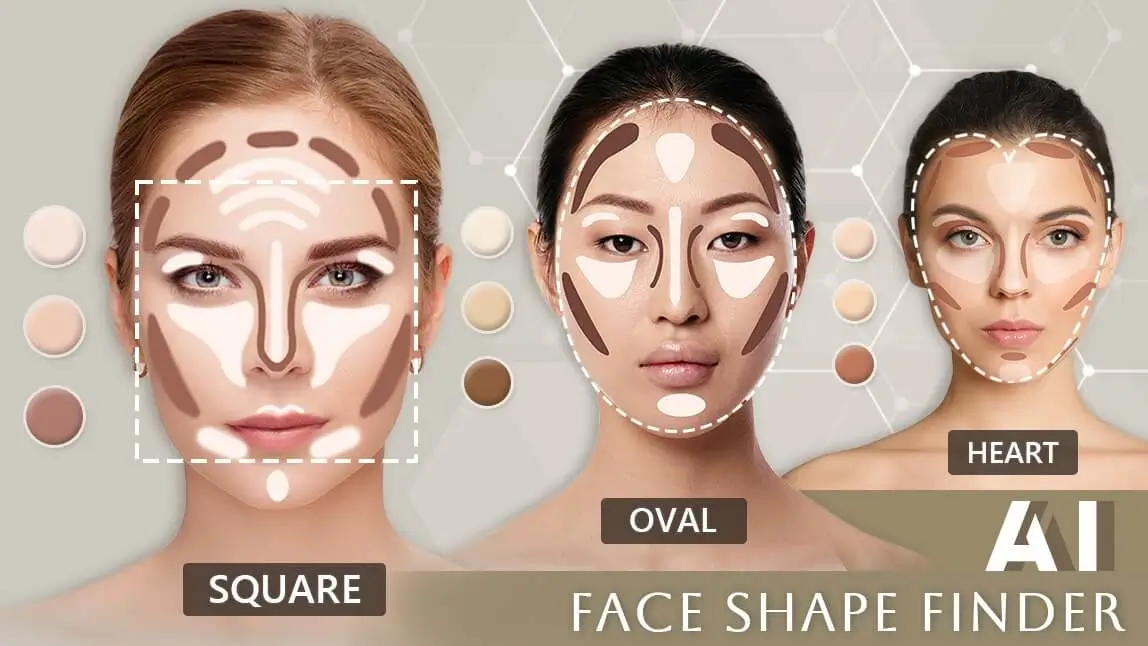
Facial contouring with makeup uses a shade one to two tones deeper than the skin to add soft shadow, and a lighter shade to bring areas forward, so the face reads with more definition. Where the shadow goes depends on how three widths compare (forehead, cheekbones and jawline) and on face length versus width. Shade the widest or longest zone, highlight the centre, and blend. A free AI face shape analyzer can take those measurements from a selfie in seconds, and brands can turn the result into a contour map shoppers try on virtually.
At a Glance
- Contour placement follows proportions: compare forehead, cheekbone and jaw widths, then face length to width.
- Shadow recedes and light advances, so contour goes on the zone to soften and highlight goes on the centre line.
- AI face analysis can classify face shape and measure facial proportions from a photo, giving shoppers a starting point instead of a quiz.
- Virtual try-on lets shoppers preview placement and shade before they buy.
How Face Measurements Decide Where to Contour

These measurement patterns map to the most common placement advice used by makeup brands:
- Length and width similar, soft jaw (round): shade the outer forehead, under the cheekbones angled upward, and along the jaw to add vertical structure.
- Jawline as wide as the forehead, angular corners (square): soften the jaw corners and outer forehead, then sweep contour up under the cheekbones.
- Forehead widest, narrow chin (heart): shade the temples and forehead sides, keep the chin free of contour, and add light at the chin.
- Cheekbones widest, narrow forehead and jaw (diamond): lightly shade the cheekbone tips and brighten the centre of the forehead and chin.
- Length clearly greater than width (oblong): shade along the hairline and under the chin, and keep cheek contour more horizontal.
- Balanced widths, gently tapered (oval): use a light touch under the cheekbones and at the temples.
What a Face Shape Analyzer Measures

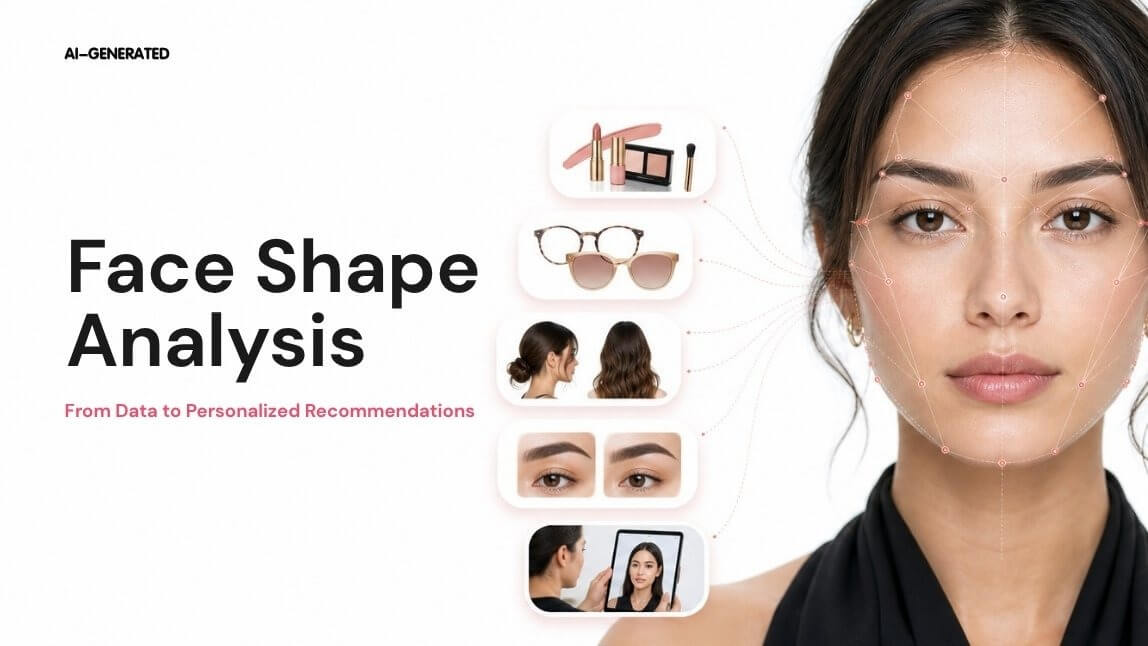
A face shape analyzer uses computer vision to locate facial landmarks in a photo or live camera feed, then compares distances between them. Perfect Corp's AI Face Analyzer is described as detecting 70+ facial features, including face shape and cheekbone structure, and 11 key facial proportions such as facial thirds, fifths and symmetry. Its online face analyzer demo classifies six face shapes: round, oval, square, oblong, heart and diamond.
Treat the result as a starting point. Lighting, camera angle, expression and hair covering the hairline or jaw can all affect a photo-based reading, and many faces sit between two shapes. Good tools present a shape as the closest match and let the shopper adjust from there.
Contour by Face Shape: From Analysis to Try-On
For brands, the value is turning a measurement into a guided routine. A typical shopper flow has three steps.
1. Scan and classify
The shopper takes a selfie or opens the camera. The analyzer reads face shape and proportions, such as whether the jaw or forehead is the widest zone.
2. Map contour and highlight zones
The detected shape triggers a placement map, like the patterns above. Pairing it with skin tone detection helps narrow shade choice: contour that is too warm or too grey can look muddy, so undertone matters as much as depth.
3. Try on before buying
A virtual contour try-on lets shoppers compare patterns and shades on their own face in real time, which is easier to judge than a static chart.
Choosing Contour Shade and Formula
- Depth: contour is usually one to two shades deeper than the skin; highlight one to two shades lighter.
- Undertone: a cooler, greyer brown reads as shadow; a warm orange-brown reads as bronzer. Deep skin tones need deep, rich contour shades rather than diluted ones.
- Formula: powder is often suggested for oily skin and cream or liquid for dry or combination skin.
- Blending: soft edges matter more than exact lines. Blend contour up and out so no stripe remains.
Should Contour Follow the Golden Ratio?
Some guides frame contour as a way to "correct" a face toward the golden ratio (about 1:1.618). Facial proportion analysis can describe how features relate, but it isn't a universal beauty standard. A study in Aesthetic Plastic Surgery found the well-known golden-ratio "phi mask" did not describe a preferred face shape well (Holland, 2008). Use proportions as visual context for placement, not as a target. For what golden-ratio analysis measures and its limits, see our golden ratio face explainer.
How Perfect Corp Supports Face-Shape-Based Contour Advice

Beauty brands and retailers can combine face analysis with virtual try-on to give contour advice at scale, online or in store. The AI Face Analyzer is offered as a web module, API, mobile SDK and in-store consultation option, and lists personalized makeup recommendations among its use cases. Virtual Makeup Try-On includes contour and highlighter categories, and the AI Shade Finder can support base-shade matching that informs contour depth.
A practical setup: run face analysis on a product detail page, show the matching contour map, then open try-on with two or three shade options filtered by detected skin tone.
Bring Face-Shape-Based Contour Advice to Your Shoppers
Perfect Corp's face analysis and virtual try-on tools can help your brand turn a selfie into a clear contour plan that shoppers can see on their own face. Talk with our team about fitting them into your site, app or counter consultations.